14 hours ago
Introduction
In a groundbreaking move set to reshape the pharmaceutical industry, Roche has unveiled its latest innovation: an AI-powered factory leveraging Nvidia's cutting-edge technology. This development promises to accelerate drug discovery and development processes, potentially bringing new treatments to patients faster than ever before. By integrating advanced artificial intelligence with high-performance computing, Roche aims to overcome longstanding challenges in drug development, such as lengthy timelines, high costs, and unpredictable outcomes.
Context: The Growing Role of AI in Pharmaceuticals
Artificial intelligence (AI) has increasingly become a pivotal tool in various industries, with healthcare and pharmaceuticals among the most promising sectors for its application. Drug development traditionally involves lengthy, costly, and complex processes, often taking over a decade and billions of dollars to bring a single drug to market. These processes include target identification, compound screening, preclinical testing, clinical trials, and regulatory approval, each fraught with uncertainty and inefficiency.
AI offers the potential to streamline these processes by enhancing data analysis, predicting molecular interactions, and optimizing clinical trials. Machine learning algorithms can analyze vast biomedical datasets to uncover patterns and insights that human researchers might miss, accelerating hypothesis generation and validation. Additionally, AI can simulate drug-target interactions and predict adverse effects early in the development cycle, reducing costly late-stage failures.
Roche, a global leader in pharmaceuticals and diagnostics, has been actively investing in AI and digital technologies to maintain its competitive edge and improve patient outcomes. Recognizing the transformative potential of AI, Roche has partnered with Nvidia, a leader in AI computing, to harness the power of advanced machine learning and high-performance computing. This collaboration aims to transform Roche's drug development pipeline by integrating AI-driven insights with Roche's extensive biomedical data and research expertise.
The Core of the Innovation: Nvidia-Powered AI Factory
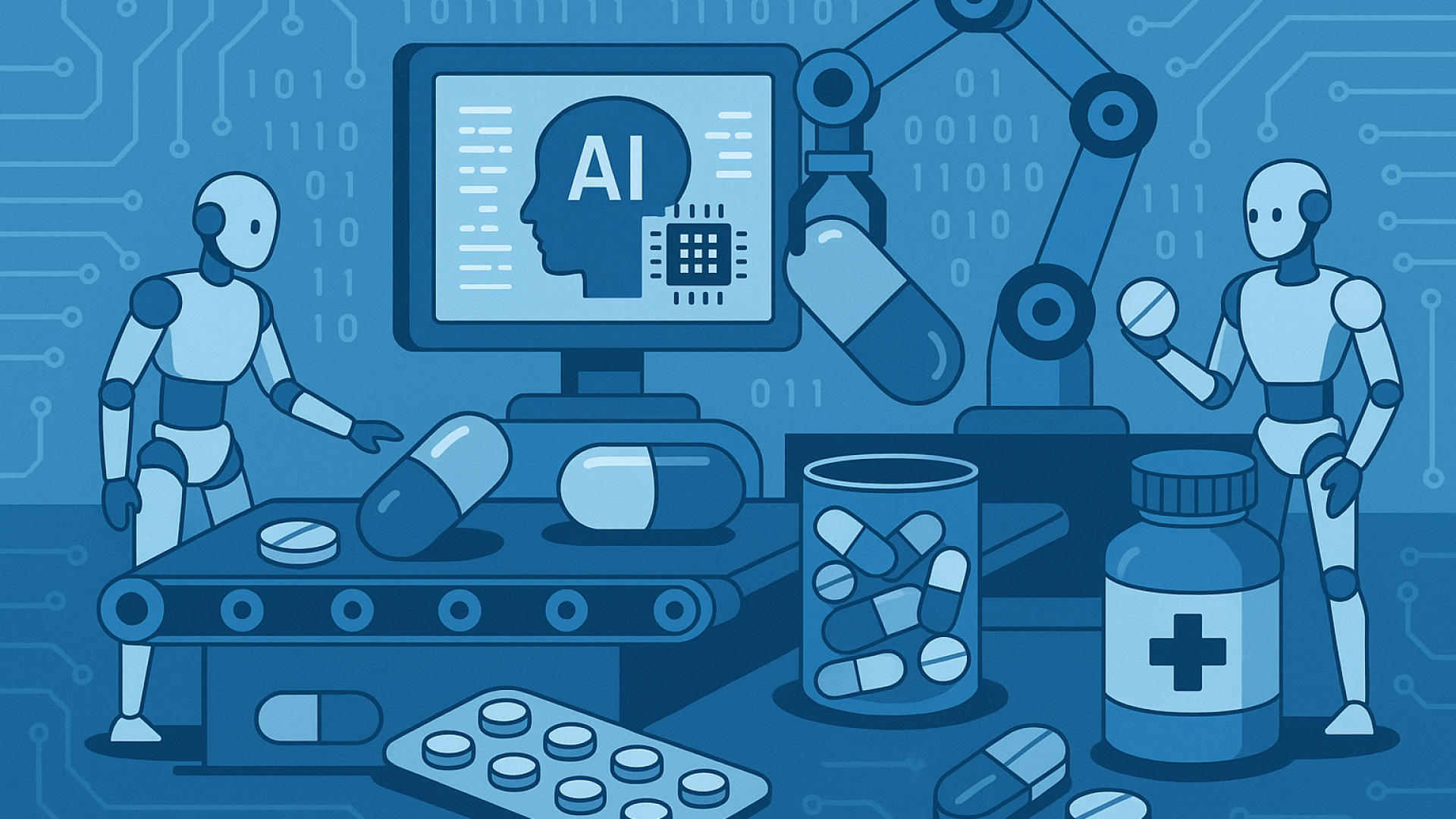
The newly launched AI factory represents a state-of-the-art facility that integrates Nvidia's powerful GPUs and AI frameworks with Roche's biomedical research capabilities. This factory is designed to automate and enhance multiple stages of drug development, including target identification, compound screening, and clinical trial design, thereby accelerating the entire pipeline from discovery to market.
- High-Performance Computing: Nvidia's GPUs provide the computational power necessary to process vast datasets rapidly, enabling complex simulations and predictive modeling that were previously infeasible. This capability allows researchers to analyze molecular structures, biological pathways, and patient data at unprecedented speed and scale.
- Machine Learning Algorithms: Advanced AI models analyze biological data to identify promising drug candidates and predict their efficacy and safety profiles. These algorithms can learn from historical data, clinical trial results, and real-world evidence to improve prediction accuracy continually.
- Automation and Robotics: The factory incorporates automated laboratory equipment to conduct experiments and tests with minimal human intervention. Robotics streamline repetitive tasks such as sample preparation, compound synthesis, and assay execution, increasing efficiency and reducing human error.
This integration of AI and automation is expected to reduce the time required for early-stage drug discovery from years to months, significantly cutting costs and accelerating innovation. By enabling rapid iteration and data-driven decision-making, the AI factory empowers researchers to focus on high-value scientific challenges rather than routine tasks.
Implications for the Pharmaceutical Industry
Roche's AI factory represents a significant shift in how pharmaceutical companies approach drug development. By embracing AI-powered automation, Roche is setting a new standard for efficiency and precision in the industry. The potential benefits extend beyond Roche, signaling a broader transformation in pharmaceutical research and development.
- Faster Drug Development: Accelerated identification and validation of drug candidates can shorten the timeline to clinical trials and regulatory approval. This speed is crucial for addressing urgent health challenges, such as emerging infectious diseases and unmet medical needs.
- Cost Reduction: Automation and AI-driven insights reduce the need for expensive trial-and-error experimentation. Lower development costs can translate into more affordable medicines and increased investment in innovative therapies.
- Improved Success Rates: Enhanced predictive models help identify compounds with higher chances of success, reducing costly late-stage failures that have historically plagued the industry. This improvement enhances the overall productivity of drug pipelines.
- Personalized Medicine: AI can analyze patient data to tailor treatments to individual genetic profiles, improving efficacy and reducing side effects. This capability supports the shift towards precision medicine, where therapies are customized to patient-specific characteristics.
Moreover, the AI factory's data-driven approach facilitates real-time monitoring and adaptive trial designs, enabling more flexible and responsive clinical studies. This adaptability can improve patient recruitment, retention, and outcome measurement, further enhancing drug development efficiency.
Challenges and Considerations
While the promise of AI in drug development is immense, several challenges remain. Data privacy and security are paramount, given the sensitive nature of biomedical information. Ensuring compliance with regulations such as GDPR and HIPAA requires robust data governance frameworks and secure computing environments.
Transparency and explainability of AI decisions are critical to gaining regulatory approval and public trust. Regulatory agencies increasingly demand that AI models used in healthcare be interpretable and validated to ensure safety and efficacy. Roche is investing in developing explainable AI techniques and rigorous validation protocols to meet these requirements.
Integrating AI systems with existing workflows requires significant organizational change and investment. Training researchers and clinicians to work alongside AI tools, updating infrastructure, and fostering a culture of innovation are essential for successful adoption. Roche has emphasized that AI is a tool to augment, not replace, human expertise in drug development, highlighting the importance of collaboration between AI systems and domain experts.
Ethical considerations also play a vital role. Ensuring that AI-driven decisions do not perpetuate biases or inequalities in healthcare is a priority. Roche is working closely with data scientists, ethicists, and regulatory bodies to address these concerns responsibly and transparently.
Looking Ahead: The Future of AI in Healthcare
Roche's AI factory is a harbinger of a new era in healthcare innovation. As AI technologies continue to evolve, their integration into pharmaceutical research and clinical practice is expected to deepen. This will likely lead to more rapid development of novel therapies, improved patient outcomes, and a more sustainable healthcare system.
Beyond drug development, AI has the potential to revolutionize diagnostics, personalized treatment planning, and patient monitoring. The synergy between AI and biomedical research promises to unlock new frontiers in understanding disease mechanisms and therapeutic interventions.
Moreover, collaborations between technology companies like Nvidia and pharmaceutical giants such as Roche highlight the importance of cross-industry partnerships in driving innovation. These alliances combine technological prowess with medical expertise, creating synergies that can tackle some of the most pressing health challenges of our time. Such partnerships foster the development of integrated platforms that leverage AI, cloud computing, and big data analytics to transform healthcare delivery globally.
Looking forward, the continued advancement of AI hardware, algorithms, and data integration will further enhance the capabilities of AI-powered drug development. Emerging technologies such as quantum computing and federated learning may also play a role in overcoming current limitations, enabling more secure and efficient data sharing across institutions.
Conclusion
The deployment of Roche's Nvidia-powered AI factory marks a transformative milestone in drug development. By harnessing the power of artificial intelligence and automation, Roche is poised to revolutionize how new medicines are discovered and brought to market. This initiative exemplifies the future of medicine—where technology and human ingenuity converge to improve lives worldwide.
While challenges related to data privacy, regulatory compliance, and organizational change remain, Roche's proactive approach to addressing these issues demonstrates a commitment to responsible innovation. The potential benefits for patients, healthcare providers, and the pharmaceutical industry are profound, promising faster access to effective treatments and a more efficient drug development ecosystem.
As AI continues to mature and integrate more deeply into healthcare, Roche's AI factory serves as a blueprint for how technology can be leveraged to overcome some of the most complex challenges in medicine. This pioneering effort not only accelerates pharmaceutical innovation but also paves the way for a new paradigm in healthcare—one that is data-driven, patient-centric, and technologically empowered.