 4 months ago
First Spouses and state policy teams from across the country convened in Asheville, North Carolina on March 9–10 for NGA’s Youth Mental Health Action Lab, marking the kickoff of NGA’s 2026 Youth Mental Health initiative. Building on work NGA has supported since 2022, sessions explored the landscape of the youth mental health crisis, emerging best practices and the unique role First Spouses play as champions and community connectors.
Overview of Youth Mental Health Priorities
North Carolina leaders and First Spouses from multiple states opened the convening with a frank assessment of the youth mental health crisis, underscoring that rising rates of depression and anxiety among young people is a bipartisan, cross-state challenge requiring shared solutions. North Carolina First Lady Anna Stein and Oklahoma First Lady Sarah Stitt each spoke to the urgency of the moment, modeling the kind of open, stigma-reducing conversation they hope to see normalized across communities.
To address both access and stigma, North Carolina has developed a three-part crisis infrastructure model: someone to contact (the 988 line and peer mentors), someone to respond (mobile crisis and co-response teams) and a safe place (25 mental health urgent care facilities and community crisis beds). State leaders described the framework as intentionally replicable and encouraged other states to adapt it.
From the Top Down: How a Champion Can Disrupt Longstanding Mindsets

From the Bottom Up: Elevating Existing State and Territory Initiatives

This session examined how First Lady Stein’s office and the North Carolina Department of Health and Human Services (NCDHHS) built a productive, complementary partnership rooted in focus, trust and disciplined communication. The conversation drew upon North Carolina’s current priorities and the First Lady’s professional history as an expert within NCDHHS.
During the session, First Lady Stein also elaborated on her decision to concentrate on reducing stigma around mental health and substance abuse, rather than attempting to address the full scope of challenges faced by mental health and substance use systems. She emphasized the importance of developing a clear “thesis statement” to ensure that her time and resources are aligned with a single, achievable mission.
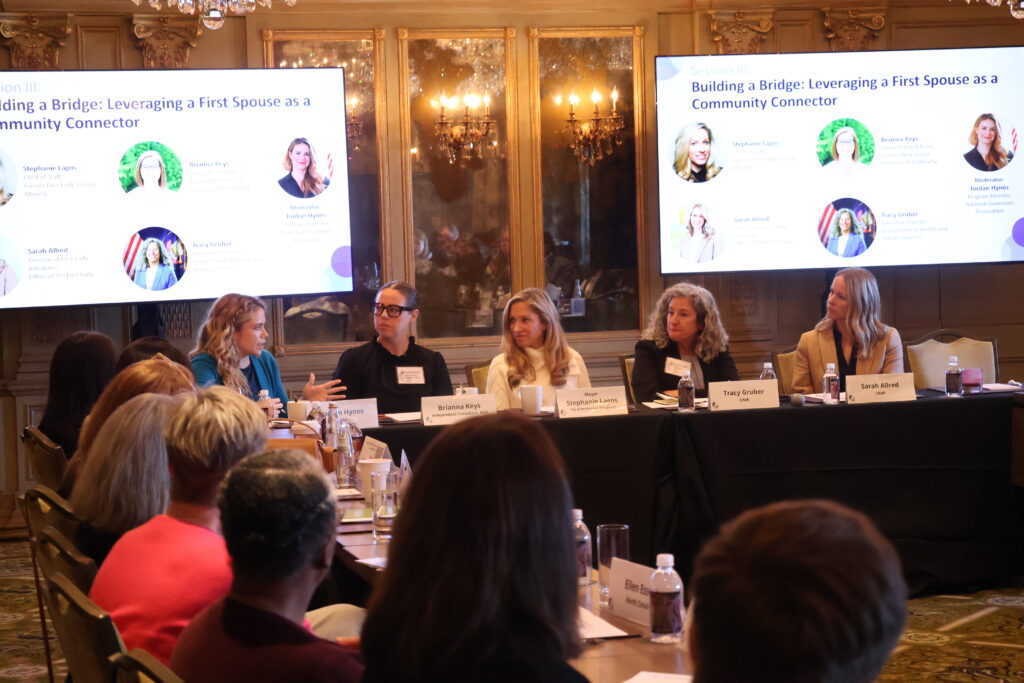
This session examined how first spouses can function as powerful community connectors and strategic extensions of a governor’s agenda. Panelists highlighted how first spouses use their influence, public trust and cross‑sector convening power to advance complex priorities such as maternal health, youth mental health and foster care. Panelists from New Jersey and Utah also touched on how a first spouse initiative can run parallel to and reinforce a governor’s initiative as NGA chair, with both states reflecting on their time in the role.
Transparent, standing communication between the first spouse’s and governor’s offices was identified as essential to avoiding silos — as was knowing when to channel constituent concerns to agency experts rather than trying to solve them directly.
Looking Back: Reflections from Former First Spouses’ Offices
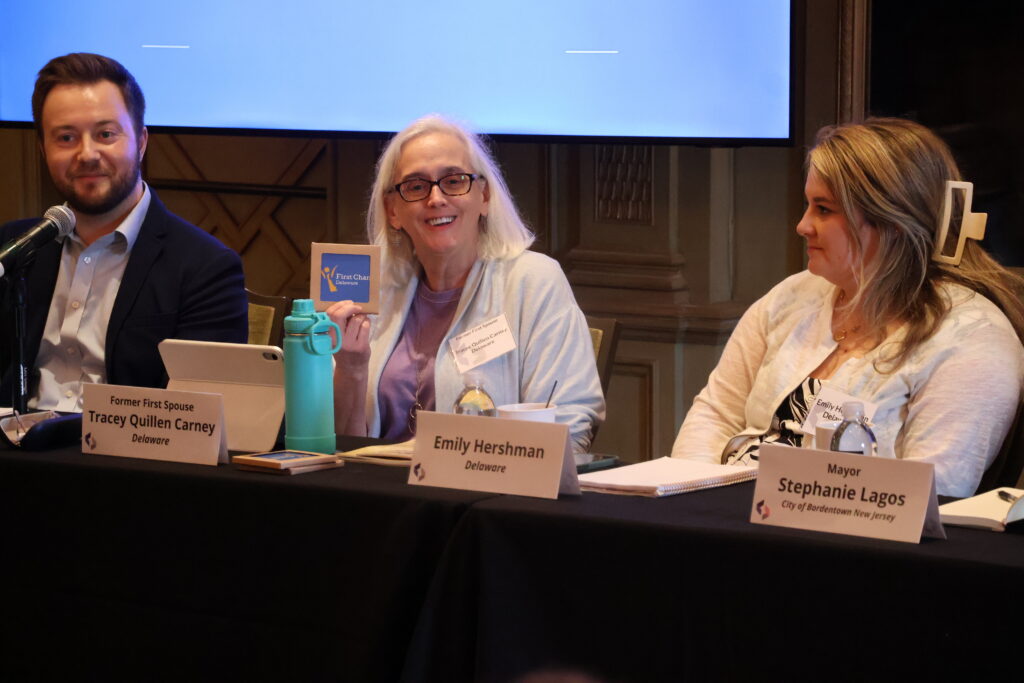
Former Delaware First Spouse Tracey Quillen Carney offered retrospective lessons from her tenure, with an emphasis on what it takes to make change last beyond an administration. The ability to convene commissioners, hospital CEOs, community advocates and families in the same room was repeatedly described as the office’s most irreplaceable asset — a form of soft power that enabled conversations and coalitions that would not have formed otherwise.
On sustainability, the session was candid: without intentional planning before departure, much of the work risks disappearing with the administration that created it. Effective strategies included embedding work in legislation, establishing dedicated workgroups, creating thorough documentation and developing explicit succession plans.
Key meeting takeaways can be read here. For more information on this event and upcoming NGA activities, please contact Jess Kirchner.